Heavy lifting fleets: how they are moving to low-carbon fuel
Insights from JDL Expo: what lifting equipment makers and rental firms say about HVO and B100, and how to simplify fuel sourcing.
30 litres an hour: why every drop matters on site
A mobile crane typically burns around 30 litres of fuel per hour. Over a full day on site, that adds up to several hundred litres, making fuel one of the heaviest cost lines in running a lifting fleet.
Multiplied across the number of machines on a job and the weeks of a project, that volume becomes a strategic issue in its own right: optimising consumption, securing supply and cutting carbon impact are no longer optional but operational necessities.
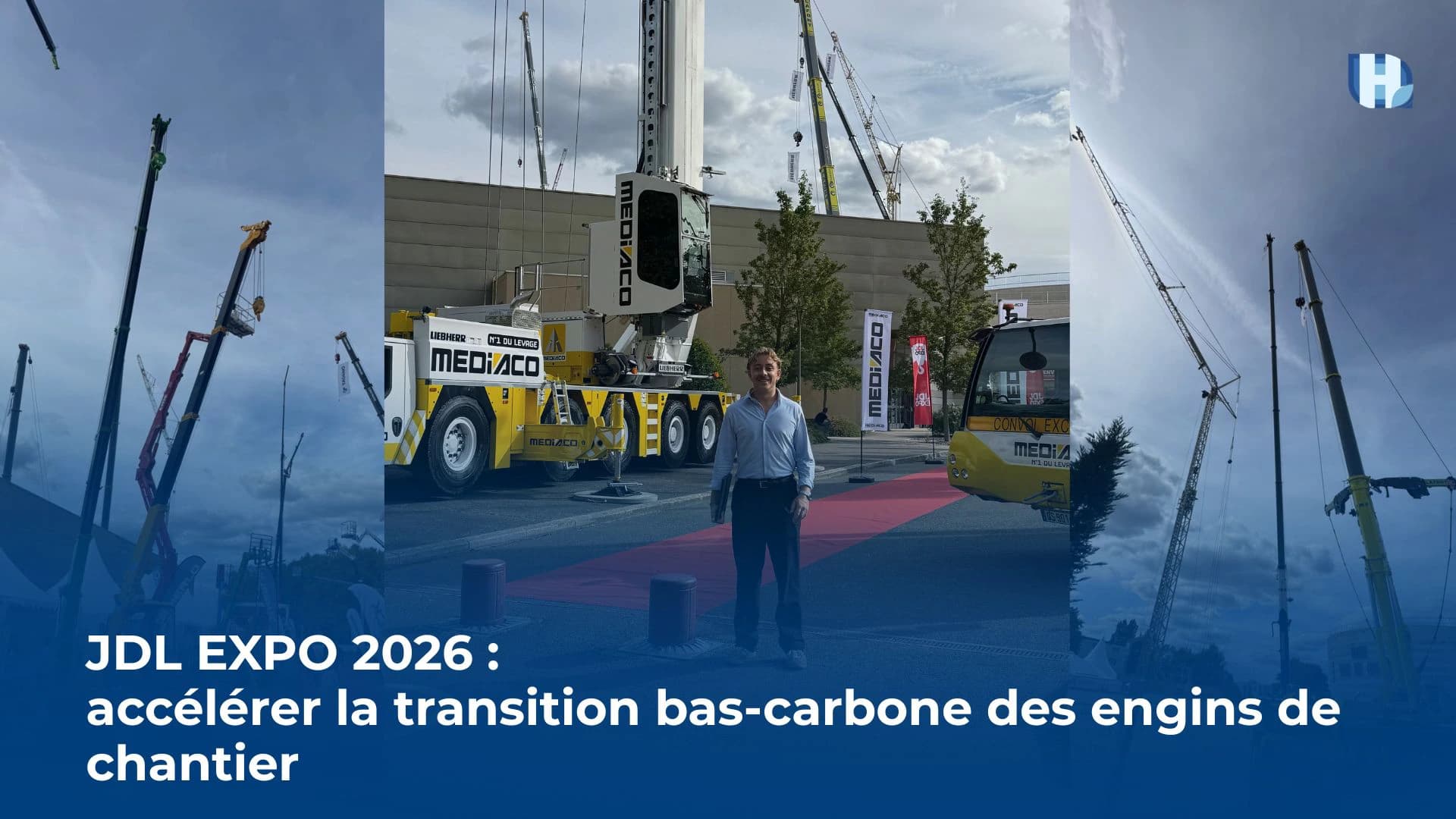
Against that backdrop, HVO (hydrotreated vegetable oil) and B100 are steadily emerging as credible alternatives to off-road diesel, cutting emissions without requiring a new machine. That is exactly what came through in conversations with industry professionals at the recent JDL Expo trade show in Beaune, dedicated to lifting, handling and heavy equipment.
Lessons from the field: confirmed compatibility, logistical hurdles
OEMs: a genuine shift in awareness
Discussions with the equipment makers on show revealed growing awareness of low-carbon fuels. Some confirmed, without ambiguity, that their current ranges are fully compatible with HVO and B100 — a strong signal for buyers still hesitating to make the switch.
Others defer the question to the engine manufacturer, leaving it to the end user to check compatibility directly with the engine maker. This inconsistency in messaging reflects a market still taking shape, where technical information is not always centralised or easy for buyers to access.
For newer ranges, particularly hydrogen, manufacturers are actively looking for partners able to offer a complete package combining the machine sale with access to the matching energy source. The challenge is no longer just selling equipment, but guaranteeing buyers they can fuel it from day one.
Rental firms: uneven adoption on the ground
Feedback from rental companies pointed to widely varying practices, often linked to company size. Some large groups manage framework contracts at head office level and resell the associated certificates, a centralised approach that simplifies administration but can complicate local logistics.
On the ground, local branches of these same groups sometimes have to switch to direct daily deliveries on site, largely to avoid theft from unattended tanks. Other, more independent rental operators still place spot orders or systematically compare three quotes to secure the best price, with no framework contract in place.
Knowing the fuel exists is not enough: sourcing it must be simple
The most consistent takeaway from the show was simple: knowing that HVO or B100 exists does not solve the day-to-day operational questions. Lifting and handling professionals first need to check compatibility, machine by machine.
Then comes a series of very practical questions: who can deliver this fuel, where, within what timeframe, at what price, and with what volumes available? For a remote job site or a fleet spread across several locations, those answers are not always easy to get quickly.
The real barrier to transition is not the availability of HVO or B100, but the difficulty of quickly comparing compatibility, suppliers, pricing and volumes.
This scattered information often forces procurement and operations teams to make endless calls and quote requests, at the expense of time better spent on the job itself. This friction point was, precisely, the one raised most often by professionals at the show.
How Heeding supports lifting and handling professionals
Heeding is a marketplace that lets lifting, handling and construction professionals find, compare and order low-carbon fuels from multiple distributors on a single platform. There is no more need to juggle several contacts just to get a quote or check available volumes.
The platform also centralises traceability data, something increasingly expected by clients and procurement teams looking to document their decarbonisation efforts. Every order can be tracked, compared and documented over time.
For fleets that have not yet started their transition, Heeding offers a Flash Diagnostic: a quick assessment of equipment compatibility, volume needs and available sourcing options near their sites. It gives fleet managers a concrete starting point for moving from interest to action.
Building the right tools by listening to the field
The conversations gathered in Beaune confirm one thing: the shift to low-carbon fuels in lifting and handling is not just about the technical availability of solutions, but about making them accessible, comparable and reliable day to day.
It is by listening to manufacturers, rental firms and operators on the ground that tools genuinely fit for purpose get built, rather than solutions designed far from the realities of the job site.
Were you at JDL Expo and we did not get a chance to talk? Get in touch with Heeding to discover how we can simplify your low-carbon fuel sourcing, or run your Flash Diagnostic for free.