Low-carbon fuels: how CMA CGM supplies its dual-fuel fleet
As dual-fuel fleets expand, CMA CGM is pursuing a multi-fuel strategy to secure reliable low-carbon fuel supply.
Shipping's biggest challenge: fuelling dual-fuel fleets
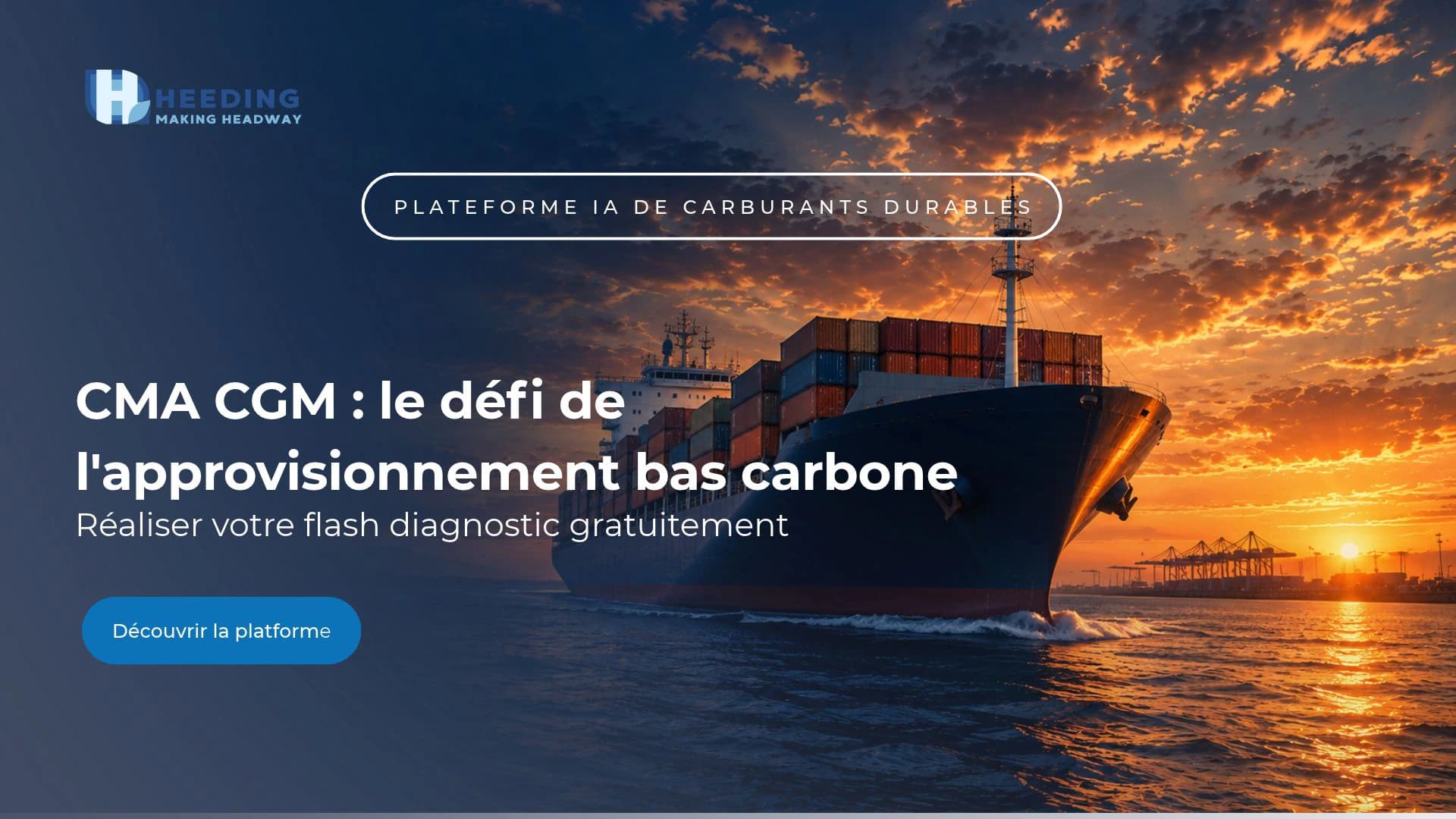
On this World Energy Day, one fact stands out for maritime transport: dual-fuel engine technology is advancing faster than the real-world availability of the low-carbon fuels meant to power it. Shipowners are investing in vessels able to run on several fuel types, yet actual biofuel supply remains fragmented, geographically uneven and often unpredictable.
For a shipowner, owning a dual-fuel fleet is not enough: fuel still has to be bunkered at the right place, at the right time, in a compliant and traceable form. This supply challenge, more than the onboard technology itself, is what actually sets the pace of maritime decarbonisation today.
CMA CGM's fuel-agnostic approach
Rather than betting on a single pathway, CMA CGM has adopted what it calls a fuel-agnostic strategy, remaining neutral on which energy technology ultimately wins out. The carrier deliberately diversifies its alternative-fuel sourcing so it does not depend on a single market or a single supplier.
The approach covers liquid biofuel, biomethane, biomethanol and bioethanol at the same time, each suited to different vessel types and regions. The goal is to adapt to local availability rather than impose a single fuel across the entire fleet.
By diversifying the low-carbon fuels it uses, CMA CGM reduces reliance on any single supply chain and safeguards operational continuity.
50 bunkering operations and several world firsts
Since 2025, CMA CGM has carried out around fifty low-carbon bunkering operations worldwide. This volume reflects a gradual scale-up built port by port rather than a uniform, simultaneous rollout.
Notable milestones by fuel type
- Bioethanol: first bunkering operation carried out in Santos, Brazil.
- Bio-LNG: first operation carried out in Rotterdam, in the Netherlands.
- Biomethanol: first operation carried out in Shanghai, China.
Partnerships to secure production
Beyond bunkering operations, CMA CGM is investing alongside energy partners to build a resilient supply chain upstream. Its partnership with ENGIE to produce biomethane in Le Havre illustrates this logic: securing local production rather than relying solely on purchases in a still-narrow global market.
How Heeding secures your multi-fuel supply
CMA CGM's strategy illustrates a challenge shared by every dual-fuel operator: continuously comparing several low-carbon fuel pathways without depending on a single supplier. Heeding was built as a neutral marketplace to address exactly this need, without selling fuel under its own name.
On the platform, fuel buyers and biofuel, biomethane, biomethanol or bioethanol producers and distributors can compare available offers by port, volume and delivery window. This centralisation makes it easier to identify alternative sources quickly when a given fuel or port becomes temporarily unavailable.
Heeding also centralises the documentary traceability attached to each fuel batch, a key concern for multi-energy fleets facing growing reporting requirements. To assess your exposure and anticipate supply needs, run your free Heeding Flash Diagnostic at tools.myheeding.com/diagnostics.