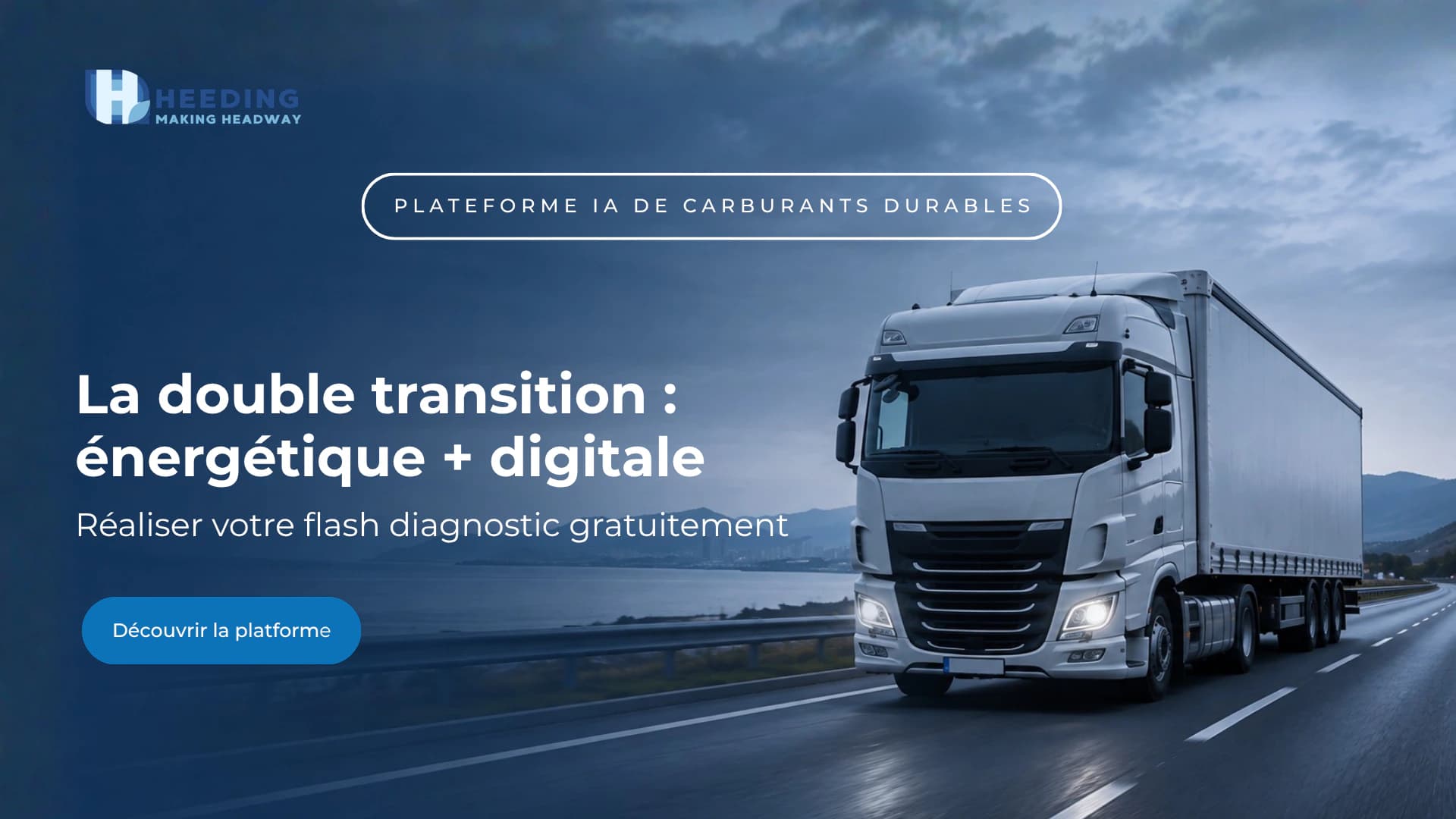
Transport decarbonisation: threat or strategic lever?
Decarbonising road transport is a threat if you endure it, an opportunity if you plan for it. HVO offers a realistic bridge to 2030, with no new-vehicle investment required.

Two possible paths for your fleet
When it comes to decarbonisation, a road transport leadership team has two options: endure the regulation or get ahead of it. That choice, made today, will decide whether the coming years bring an imposed cost or a competitive edge you built deliberately.
The reactive scenario
Staying on fossil diesel without a transition plan exposes the business to a mechanical cost increase tied to ETS2 from 2027, alongside a growing commercial risk: shippers already build carbon criteria into their tenders, and a non-compliant fleet can be shut out of key contracts.
The proactive scenario
Conversely, a fleet that starts its transition now protects its margins against the carbon cost curve, gains access to markets that demand proof of decarbonisation, and positions itself as a trusted partner for shippers who are themselves under regulatory pressure, from CSRD reporting to their own supply-chain emissions targets.
B100/HVO: a realistic bridge to 2030
Between today's fossil diesel and tomorrow's powertrains, HVO is the most immediately actionable transition path for an existing fleet. These is not long-term technology bets: they are fuels available now, distributed through an expanding network, and compatible with diesel engines already on the road.
HVO (Hydrotreated Vegetable Oil) can cut GHG emissions by up to 90% (depending on the feedstock used and the calculation methodology set out in the RED II / RED III directives), with no need to replace vehicles or retrofit engines. The switch happens at the sourcing level, not at the asset level.
HVO is the only decarbonisation lever that activates on an existing fleet, with no renewal capex, and a measurable effect from the very first fill-up.
- Full compatibility with current diesel engines, no technical modification required
- Zero short-term fleet-renewal investment
- Immediate availability, unlike still-emerging alternative fuel channels
- Measurable emissions reduction from the first delivery onward
- A gradual pathway is possible, from partial blends to pure B100
The real cost of waiting until 2030
Waiting is not a neutral position: it is a choice with a price tag, and that price rises every year. Under ETS2, the carbon cost embedded in fossil diesel is set to increase materially by 2027, a rise that will land directly on the fuel line, already one of the heaviest cost items in road transport.
On top of that direct cost sits a commercial opportunity cost. Companies acting as first movers on decarbonisation are capturing a growing share of new contracts with carbon requirements, leaving unprepared fleets on the back foot with shippers who now factor this criterion into their sourcing decisions.
Postponing the decision to 2029 or 2030, once regulatory pressure is fully in place, means absorbing the maximum carbon cost exactly when commercial and operational room to manoeuvre is at its narrowest. Acting early, by contrast, spreads out the investment and turns it into a sales argument today.
Concrete first steps to turn constraint into advantage
A successful transition is not about switching the whole fleet overnight. It starts with a precise diagnosis, followed by a gradual, tightly managed rollout.
- Map the fleet's real exposure to carbon costs through 2027-2030
- Identify the priority routes or segments for an initial B100/HVO switch
- Secure supply from qualified, traceable suppliers
- Document the emissions reduction so it becomes a verifiable sales argument
- Gradually extend the scope based on measured results
Each of these steps can start without waiting for a full decision on the fleet's long-term future. This test-and-extend logic is what delivers early results while keeping full control over the investment timeline.
Assess your exposure before deciding
Before choosing between the status quo and a transition, a leader needs one thing: a quantified read on their own exposure, not an industry average. The ETS2 cost on your diesel volumes, the potential gain from switching to HVO, and the commercial risk tied to your specific shippers cannot be read off a general statistic.
Decarbonisation is neither a threat nor an opportunity in itself: it becomes one or the other depending on when you decide to act.
Heeding offers a Flash Audit to help you make an informed decision: a quick assessment of your business exposure to ETS2 and your potential transition to B100/HVO, before making any commitment. It is the starting point for turning a regulatory constraint into a controlled strategic decision.