Road transport: turning sustainable fuel into an advantage
Transport tenders increasingly include binding carbon clauses. Hauliers who adopt B100 and HVO don't just cut emissions: they win contracts, retain key accounts, and protect their margins.
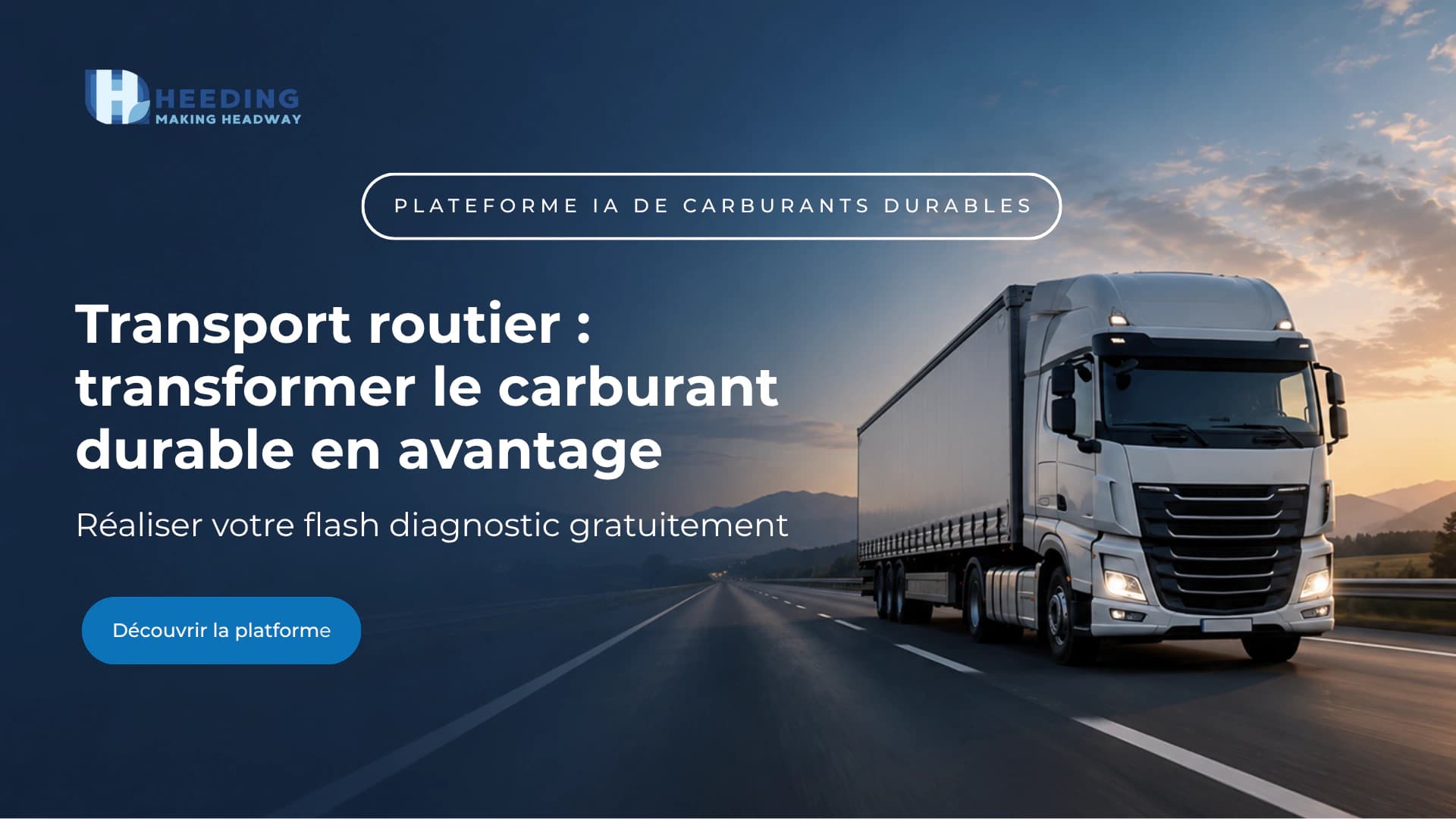
Decarbonization is becoming a decisive factor in competitive bidding processes
For a long time, road transport decarbonisation was a box to tick in tender files, well behind price and lead times. That is no longer the case. Procurement teams at major accounts — retail, industry, logistics — now build carbon clauses directly into final scoring, on par with service reliability.
A significant share of transport tenders now include a binding carbon clause: without a credible decarbonisation offer, a carrier can be eliminated before pricing is even reviewed. This shift changes the nature of competition. Sustainable fuel is no longer a peripheral environmental topic — it has become a condition for commercial eligibility.
Turning an Additional Cost into a Competitive Advantage
B100 and HVO remain more expensive than fossil diesel. Framed as a simple cost line, they erode margin. Framed as a traceability and carbon-proof mechanism, they become a competitive differentiator that few rivals can match quickly.
The real cost isn't the price of fuel. It's the contract you risk losing.
Carbon footprint data makes all the difference
The key is to document what the client is actually buying: measured and verifiable CO2 reduction, a fuel traceability chain through to the vehicle, and usable data for the client's own CSR reporting. A major account that must justify its own decarbonisation path to shareholders or end customers needs suppliers who can hand over that proof without manual reconstruction.
The Commercial Benefits of Sustainable Fuel
The benefit of sustainable fuel isn't limited to retaining an existing contract. It opens doors into segments where CSR sensitivity justifies better commercial terms: retail chains with public commitments, industrial clients under pressure from their own customers, regulated players looking to secure their supply chain.
- Access to premium segments where decarbonisation is a condition of entering the shortlist.
- Stronger pricing leverage with clients who value the carbon data provided.
- Lower risk of losing a contract at renewal, as carbon clauses tend to tighten over time.
- Stronger client retention: a customer relying on your CO2 data is less likely to switch providers.
- Lasting differentiation from competitors still positioned on price alone.
Gain a competitive edge in the market
Long-term transport contracts are being signed now, not in three years. Carriers who structure their B100/HVO offer first lock in framework agreements before competitors can build an equivalent proposition. Once a client has integrated a supplier capable of delivering reliable carbon proof, the switching cost to a competitor becomes a real barrier.
Conversely, waiting for regulation to force the issue means negotiating from behind, against competitors already on the approved list and clients less inclined to revisit their supplier panel. The first carrier to bring a credible decarbonisation offer to an account often sets the standard others must later match, without earning the same commercial premium.
Being listed today means gaining a head start that will last for several years.
Assess Your Competitive Potential
The question is no longer whether sustainable fuel will become a decisive criterion in road transport, but which carriers will turn it into a commercial advantage first. That requires knowing precisely where your room for manoeuvre lies: which contracts are exposed to a carbon clause, what CSR scoring gain a B100/HVO offer could deliver, and which clients would be willing to value that data in negotiation.
Before your competitors build their own case, evaluate your commercial upside with a fast, concrete diagnostic of your exposure and opportunities.