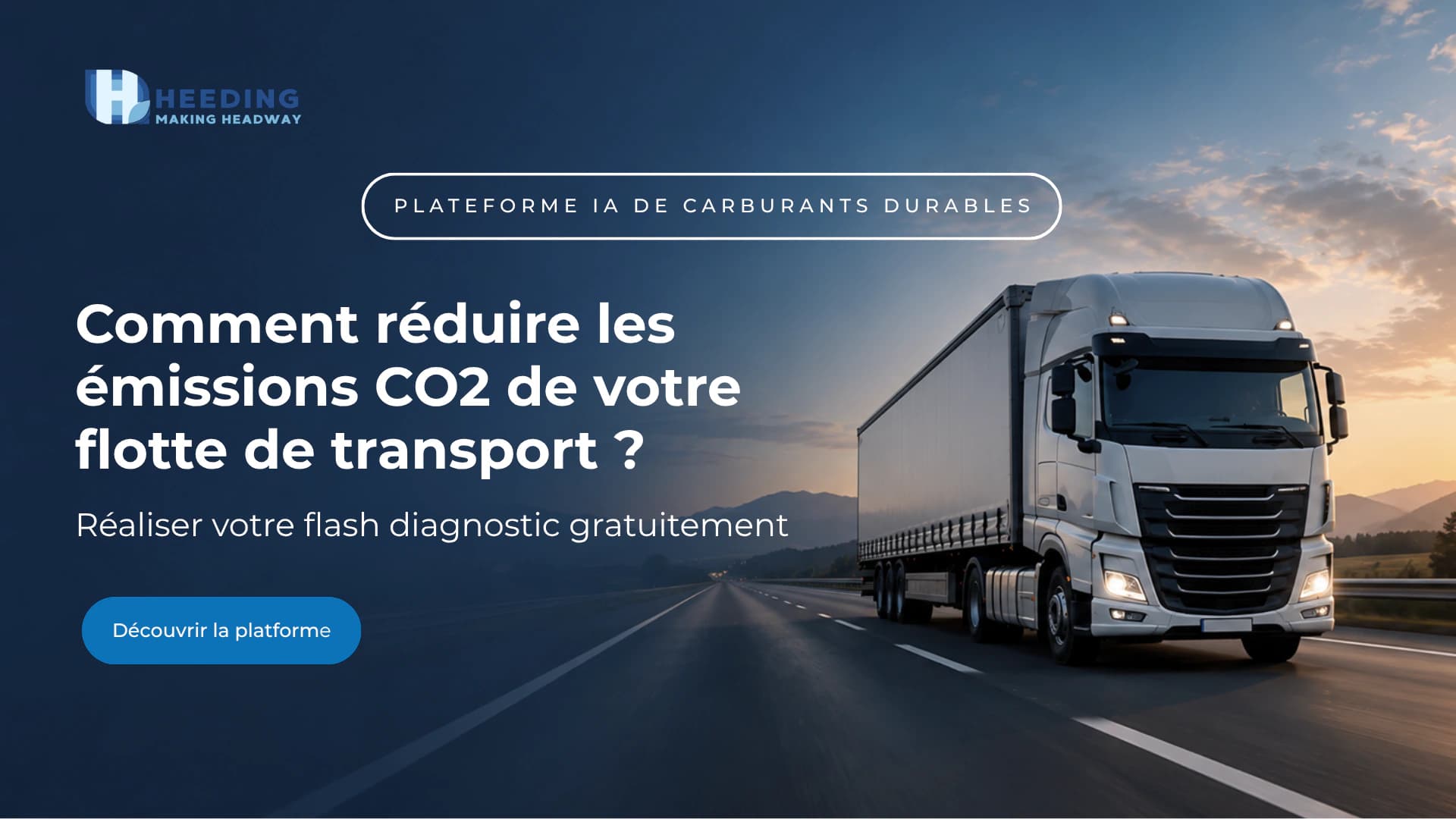
How can you reduce your transportation fleet's CO2 emissions?
Cutting your fleet's CO2 is no longer a CSR nice-to-have but a profitability issue. Three levers you can pull immediately, without grounding a single vehicle.
The real hidden cost of CO2 emissions
For a long time, a road fleet's CO2 emissions belonged in the annual CSR report, with no direct impact on cash flow. That era is ending. With the planned introduction of the ETS2 carbon market, the carbon embedded in fossil diesel becomes a direct cost passed on at every fill-up, on a price trajectory that will only rise in the years following its launch.
On top of this direct regulatory cost sits an equally concrete commercial risk: penalty mechanisms inspired by frameworks like FuelEU are spreading, and shippers now build explicit carbon criteria into their tenders. A carrier unable to document its environmental performance doesn't just pay more for fuel — it loses contracts to better-prepared competitors.
CO2 is no longer a side line item in the accounts: it is a direct cost driver and a selection criterion in tenders.
Three levers you can pull without grounding a vehicle
Faced with this dual pressure — regulatory and commercial — the temptation is to push the topic to a future fleet renewal. That's a strategic mistake: three levers let you act now, on your existing fleet, without heavy capex or downtime.
- Switch all or part of the fleet to a liquid sustainable fuel (B100 or HVO), compatible with existing engines and infrastructure.
- Roll out a structured eco-driving programme, with individual driver tracking and measurable targets.
- Optimise routes and load factors with planning tools, to cut empty kilometres and overall fuel consumption.
These three levers work together: fuel choice acts on the carbon intensity of every litre burned, while eco-driving and route optimisation reduce the number of litres needed in the first place. Combined, they deliver a substantial cut in emissions and carbon cost within months, without waiting for a fleet renewal cycle.
Why B100/HVO is the lever with immediate impact
Electric and hydrogen dominate the conversation on decarbonising heavy transport, but rolling them out fleet-wide requires investment in charging or refuelling infrastructure, range constraints on long-haul routes, and vehicle renewal cycles measured in years. For a carrier that needs to cut emissions now, these are not solutions that can be mobilised in the short term.
B100 and HVO offer a directly operational alternative: these liquid sustainable fuels run in existing diesel engines (Engine check required for the B100), with no mechanical modification and no new distribution infrastructure, while delivering a significant lifecycle reduction in greenhouse gas emissions compared with fossil diesel. The lever is therefore usable on the current fleet, starting with the next fuel delivery.
This doesn't mean electric or hydrogen should be dropped from the long-term strategy — they remain relevant for certain use segments. But to absorb rising carbon costs and meet tender requirements within the timeframes at hand, liquid sustainable fuel is currently the only lever that can be deployed immediately across an entire fleet.
Measuring and proving your CO2 reduction
Reducing emissions is no longer enough — you need to be able to prove it, with reliable, traceable data. A growing share of transport tenders now require automated traceability of CO2 reductions, with supporting evidence broken down by trip, vehicle or contract, which internal spreadsheets struggle to produce reliably and keep up to date.
This evidence must also stand up to scrutiny from shippers who are themselves subject to non-financial reporting obligations and who pass their traceability requirements down through their entire supply chain. Structured tracking of sustainable fuel volumes used, consumption savings achieved and emissions avoided is therefore becoming a commercial prerequisite, as well as an internal management tool for arbitrating between levers.
Acting before the bill gets bigger
Every month without an action plan is another month of carbon cost absorbed with nothing to show for it, and another month of lag behind competitors who are already documenting their reduction trajectory. The right combination of levers — sustainable fuel, eco-driving and route optimisation — depends on each fleet's profile: distances covered, vehicle mix, and customer constraints.
Identifying your own priority levers, quantifying their potential impact on emissions and TCO, and securing reliable access to B100 or HVO are the concrete first steps to take before regulatory costs climb further. A targeted audit of your fleet can lay these foundations quickly, without heavy commitment.
Start your energy transition today.
Complete a free Heeding Flash Assessment in less than 3 minutes and discover the low-carbon solutions best suited to your fleet, their impact on your emissions, and your potential cost savings.