
Why platforms are set to transform the fuel market for sustainable fuels
The sustainable fuels market still runs on phone calls, emails and opaque pricing. Like other sectors before it, it is now shifting toward digital platforms that can compare, secure and trace energy purchases.
A still artisanal market facing strategic stakes
Sustainable fuels — biofuels, e-fuels, SAF, low-carbon LNG — are taking on a growing role in the decarbonisation strategies of aviation, shipping, road and rail transport. Yet the way these fuels are bought has barely changed: the market remains fragmented, regional, and largely dependent on one-to-one commercial relationships.
Every buyer still has to identify available producers and distributors on their own, make sense of pricing structures that are rarely standardised, and manually check volume availability. This complexity slows the adoption of sustainable fuels precisely when European regulation is pushing the sector to move faster.
The limits of traditional purchasing methods
A large share of sustainable fuel purchases are still negotiated by phone, by email, or through occasional business meetings. This approach works, but it comes at a cost: time spent contacting multiple suppliers, limited visibility into market prices, and difficulty comparing offers that vary by region, fuel type and sustainability criteria.
- No consolidated, real-time view of prices and availability
- Dependence on a small, familiar pool of suppliers
- Manual processes for checking compliance and traceability
- Longer lead times caused by back-and-forth negotiations
- Difficulty documenting purchases for reporting obligations
For fleets that need to arbitrate between several fuel types, across multiple sites and under different regulatory constraints, these methods become increasingly hard to sustain as volumes and requirements grow.
What platforms have already changed elsewhere
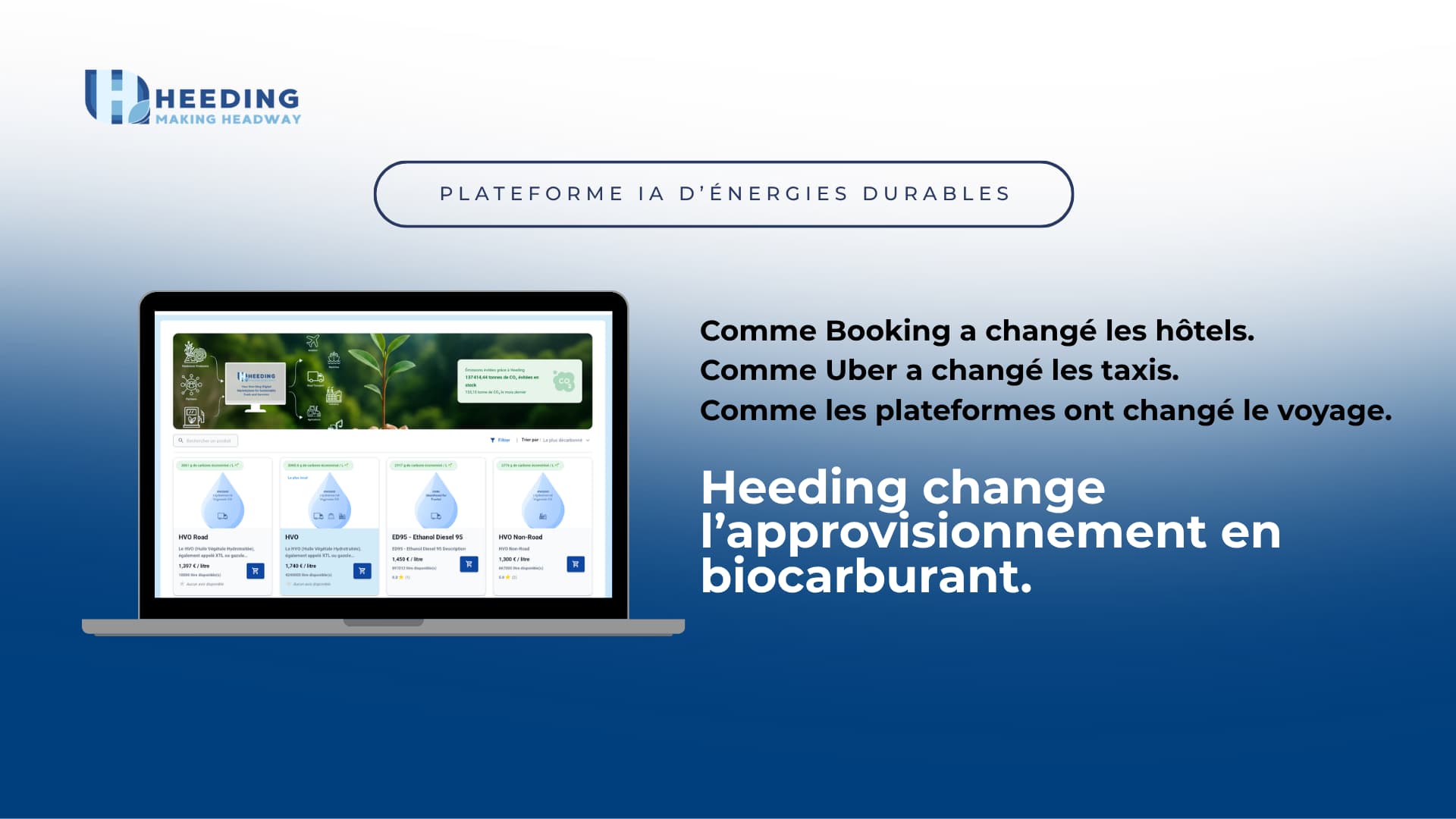
Other industries have already undergone this transformation. Booking.com revolutionized hotel reservations by centralizing the market and making it possible to compare properties with just a few clicks. Uber has simplified urban mobility by instantly connecting drivers and passengers. In business procurement, platforms like Amazon Business and Alibaba.com have profoundly transformed procurement processes by offering greater transparency, choice, and simplicity. The sustainable fuels market is now on the cusp of this same digital revolution.
In each case, the platform did more than simplify a transaction: it made the market more transparent, faster and more reliable, by giving both sides the same information at the same time. That is exactly what is missing today in the sustainable fuels market.
A demand for simplicity that is reaching energy
Procurement teams and fleet managers already use digital tools to manage other categories of spend: logistics, indirect purchasing, fleet management. They now expect the same level of simplicity for their sustainable fuel purchases, with clear comparison of offers, visibility on available volumes, and contractual security for each transaction.
The energy transition will not be won only through the production of sustainable fuels, but also through how they are purchased and tracked.
This need is reinforced by regulatory obligations — European frameworks such as ETS2, FuelEU Maritime, ReFuelEU Aviation, CSRD and RED III — which require buyers to document their purchases and emissions with growing rigour. Without a centralised tool, this traceability relies on scattered files and informal exchanges that are hard to audit.
How Heeding centralises the market
Heeding was built to bring to the sustainable fuels market what platforms have brought to other sectors: a single entry point to compare, buy and track. Buyers — in aviation, shipping, road or rail — get a structured comparison of available offers based on their needs, regions and sustainability criteria, without having to reach out to multiple contacts.
For producers and distributors, the platform provides visibility with a base of qualified buyers, without having to multiply sales efforts for each prospect. Once an offer is selected, sourcing relies on secure processes, and purchase tracking — volumes, origin, compliance criteria — is centralised in a single space, supporting both internal steering and reporting obligations.
This approach benefits both sides: buyers gain speed of decision and regulatory peace of mind, while distributors extend their commercial reach and shorten their sales cycle. It is the same win-win logic that allowed platforms to reshape travel, mobility and corporate purchasing, and that is now set to redraw the sustainable fuels market.
Find the best sustainable fuels for your fleet
Compare available offers, identify the low-carbon fuels best suited to your operations, and simplify your fuel procurement with the Heeding platform.
Create Your Free AccountGrow your sustainable fuel business
List your sustainable fuels on Heeding and connect with transport companies, industrial businesses, and fleet operators looking for low-carbon energy solutions. Increase your visibility and reach new customers through our platform.
Become a Distribution Partner