
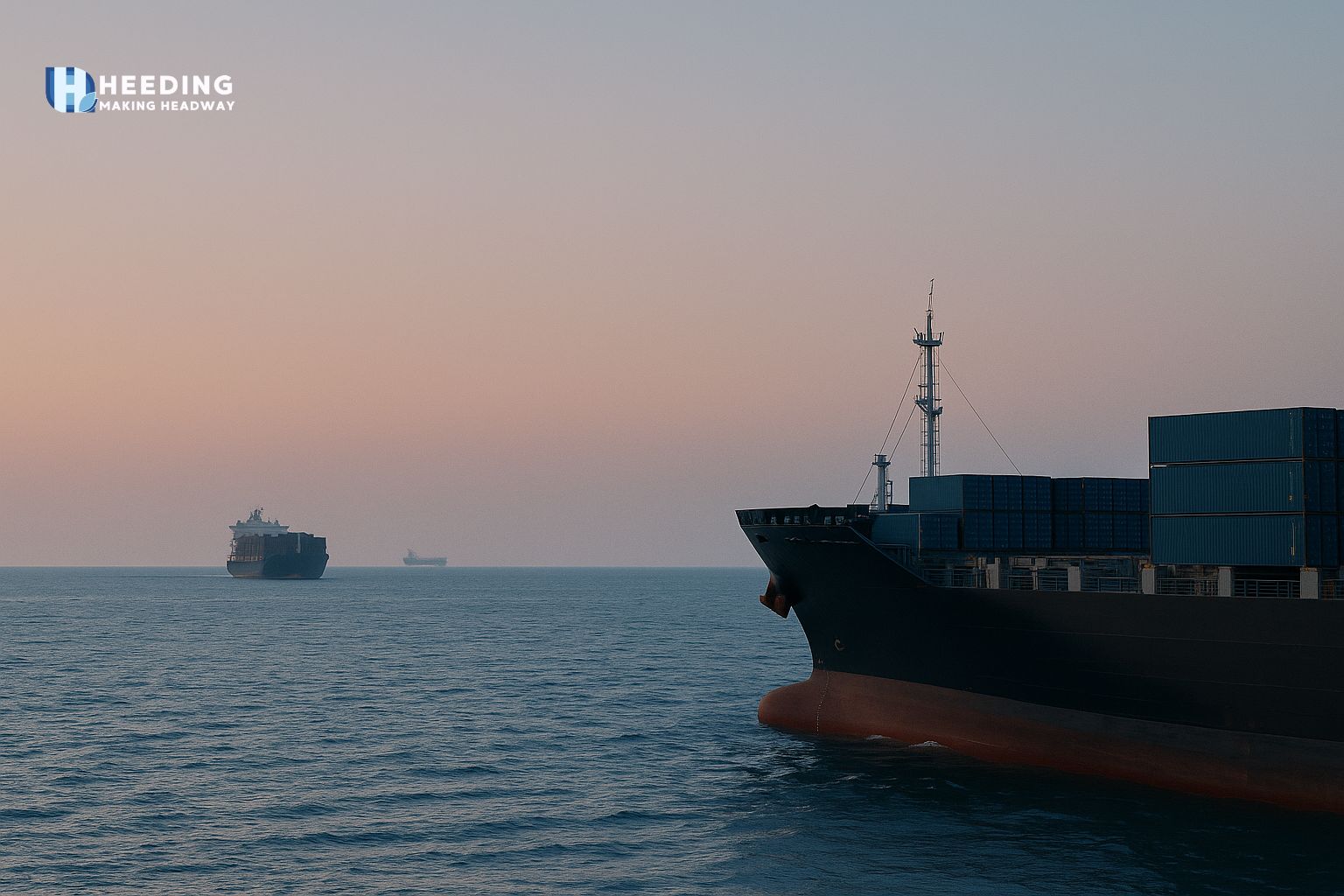
The maritime sector is undergoing a profound energy transformation. Driven by new climate and regulatory requirements, shipowners must adopt more sustainable fuels while managing an increasingly complex supply chain.
Faced with the rise of alternative fuels such as XTL, FAME, HEFA, e-methanol and hydrogen, and the entry into force of regulations including IMO 2024 and the RED III directive, the entire fuel supply system is being reinvented. How can this transition be made seamless, reliable, and competitive? This is precisely what the Heeding platform offers through its intelligent digital matchmaking approach.
New Fuels and Regulatory Constraints in the Maritime Sector
Since 2024, the International Maritime Organization has imposed stricter carbon intensity thresholds for ships, while the European Union, through the Fit for 55 package and the RED III directive, requires higher incorporation of renewable energy sources. For maritime operators, it has become essential to adopt certified alternative fuels quickly while ensuring full traceability and compliance.
Emerging solutions include:
XTL (X-to-Liquid) is a synthetic fuel produced from biomass or waste. Fully interchangeable with marine diesel, it can reduce lifecycle CO₂ emissions by up to 99%, saving nearly 328 tons of CO₂ per vessel each year.
FAME (Fatty Acid Methyl Ester) is a biodiesel made from vegetable or waste oils, compliant with the EN 14214 standard, and capable of reducing emissions by 50–80% depending on the raw materials used. It is compatible with existing engines without modification.
HEFA (Hydroprocessed Esters and Fatty Acids) is a renewable diesel obtained by hydrogenating residual oils or animal fats. It can be used pure or blended, without any engine adaptation, and is recognized by major certification schemes such as ISCC.
E-methanol is a synthetic fuel produced from green hydrogen and captured CO₂, offering carbon-neutral combustion and integrating smoothly into existing supply chains.
Green hydrogen can be used directly or as a raw material for e-fuels. It generates no CO₂ emissions during use and has massive decarbonization potential, though storage and transport remain technical challenges.
Despite these advances, integrating these fuels into maritime operations remains a challenge. Producers are often geographically dispersed, available volumes are limited, and certification requirements are strict. Without digital tools, managing this complexity becomes time-consuming and costly.
A Complex and Fragmented Supply Chain
Several obstacles continue to slow the adoption of sustainable fuels. The market is young and fragmented, making it difficult to identify certified suppliers with the right volume at the right time.
Coordination between carriers, ports, suppliers, and operators still relies largely on manual exchanges, which cause delays and errors. Compliance and traceability are also handled manually, with high risk of non-compliance.
The lack of price transparency and inefficient logistics lead to high transaction costs and limited economies of scale.
In short, the current maritime value chain is fragmented, costly, and insufficiently digitalized. To accelerate the energy transition, it is urgent to streamline exchanges and secure operations with dedicated digital solutions.
Heeding: Digital Technology at the Service of Sustainable Maritime Logistics
This is precisely Heeding’s mission. The Heeding SaaS platform acts as a digital conductor for the sustainable fuels market. By centralizing supply, demand, and regulatory requirements, it transforms complexity into opportunity.
Its intelligent matchmaking engine recommends the best matches between supply and demand in real time, considering technical, geographical, economic, and regulatory factors.
Users can compare certified suppliers instantly, access transparent pricing, and optimize procurement strategies. Each transaction automatically includes all required documentation such as RED III and ISCC certificates, blockchain traceability, and verified CO₂ avoidance data, simplifying compliance and reporting.
Integrated carbon dashboards allow operators to visualize and certify the environmental impact of each operation in real time.
Towards Greener and More Efficient Maritime Logistics
Field feedback and simulations are highly promising. In yachting, replacing marine diesel with XTL can save up to 328 tons of CO₂ per vessel each year. In the industrial sector, switching to green hydrogen could achieve a near-total reduction in direct emissions at energy-intensive sites.
Beyond the environmental impact, adopting the Heeding platform helps reduce administrative workload, ensure regulatory compliance, and improve procurement efficiency. The energy transition becomes a strategic lever combining economic performance and climate responsibility.
Join the Transformation
The energy transition at sea is already underway, and digitalization is its catalyst. Heeding invites shipowners, ports, and fuel producers to discover the platform and join the early adopter program.
Express your interest today to explore a personalized demo and take part in shaping the future of sustainable maritime logistics.
We are here to assist you on your sustainability journey. Please feel free to reach out to us through any of the following channels:

1047 Route des Dolines, All. Pierre Ziller, 06560 Valbonne, FRANCE
.svg.png)


